


One common recommendation from personal finance “experts” is to save 10% of your income. Unfortunately this advice is absolutely awful and will make sure that you’re extremely far behind over a 30-40 year time frame. Why? Well the numbers only work if you expect to make the same or less as you get older. We’ll use the power of compounding and factual math to prove this out. To avoid any sort of debate over investing returns, inflation etc. we will use 5% returns. This means the 5% gains encapsulate inflation already so it’s an aggressive number (5% returns guaranteed for 39 years straight).
Saving 10% Works If We Assume No Lifestyle Improvement
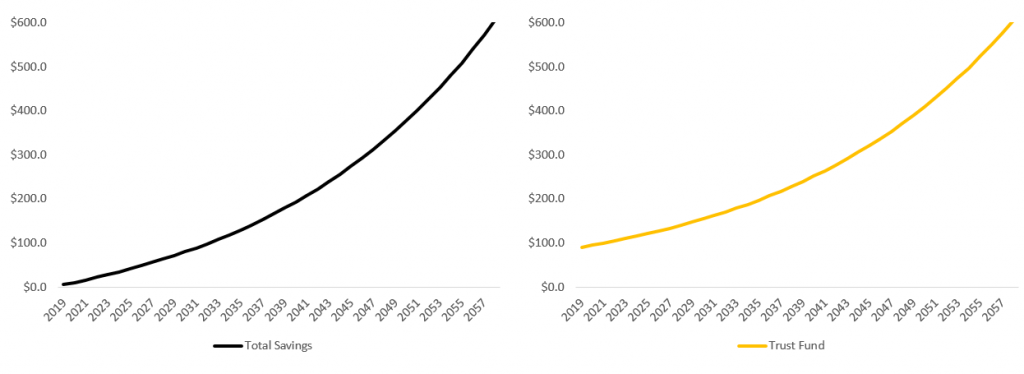
Save 10% – No Income Change: In this first example what we will do is assume that a person earns $50,000 per year. We will assume that they save 10% of their gross income ($5,000) per year for 39 years straight. At this point they should be at a nice retirement age of 60. The second assumption we make is 5% returns on that money for life. Anyone who has been through the last 20 years of stock market volatility knows this won’t be perfect. But. We want to make the picture as clear as possible. So we’re sticking with it.
What happens? In the first example, the math is extremely easy to run. What you see is that you save $5K a year, you spend $45K a year and your $5K annual contribution compounds at 5%. At the end of the 40 year run (39 years of compounding) you have $604,000. But… There is a problem here. The problem is that the spending number is actually $45,000 which means you have a multiple of just 13.4x. Since we know you need about 20x your living expenses to retire, you’re short $296,000. So despite saving 10% of your income from 21 years of age to 60… you’re not able to quit. You’d have to work until you’re 68 years old to pass the 20x number.
Wait what about social security and other inheritances… this could help fix the situation. While it is possible to make up the difference with social security and other one-time inheritances you *might* be able to pull it off. That said… Who wants to work for 40 years and live with a “might be fine” scenario. Not us and likely none of our readers.
The Power Of Compounding: If you wondered why Trust Fund babies don’t have anything to worry about… look no further than the power of compounding. If someone invested $90,085 in year 1 (2019 in this example) they would have exactly $604,000 as well. Instead of being shocked by this, it helps explain why having a career in sales or having a one-time *event* is so critical to becoming rich. The entire goal is to invest a lump sum as early as possible and forget about it so you don’t have to worry about saving money in the future (easier said than done of course!).
Saving 10% With Lifestyle Improvement is Actually Worse
Save 10% – Grow Wage: In this example we’ll do the exact same math. But. We will assume that your wage actually increases over time. We have to keep the comparisons equal so remember our assumptions: 1) market returns of 7% which means an actual return of 5% after inflation eats 2%, 2) we assume you save 10% of your income and now 3) the new assumption is your wage grows at 4%, which is the average, or just 2% after inflation. In summary, your investment return in 5% (7% actual – 2% inflation) and your wage growth is 2% (4% actual – 2% inflation).
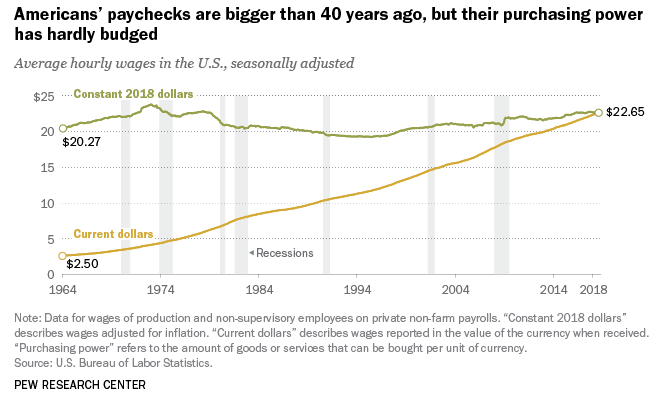
What happens? In this example the math is a bit more complicated but here are the numbers. By age 60 you’re making $108,000 per year and you have $805,325 to your name. Since you’re saving 10% it means your annual spending in the year 2058 is $97,413/year. When we apply that number through it means you have 8.3x your annual spending saved up. Wait a minute. This is a significantly lower number than the 13.4x you had when your wage was simply flat lined. The reason for this is that investment gains are outpacing your ability to earn. This has been the case for the average person for quite some time and also explains why the rich get richer while the poor get poorer over time.
The Problem: There are two common rebuttals with this math, first we assume the person cannot downgrade his lifestyle. This is entirely true and perhaps the person is slightly better off (meaning he could live on less). The problem? Well if we assume he can live on $60,000 instead of $97,000… this still leaves you with just 13.4x (essentially equal to the first example with a decrease in lifestyle). Nothing amazing.
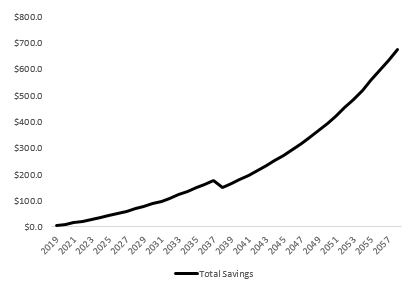
The second rebuttal is that you’d save more as a percentage over time. This is true and is a legitimate debate point. The one wrinkle we’d throw in… we assume the person never had a set-back for a single year. Also. At age 40 earnings usually peak and it is unlikely to grow earnings from 40 to 60 at the exact same rate as from age 21-40. For fun… think about this insane stat… if this same person took a single year off (say at age 40) and actually lost money as he was unemployed (-$28,000) he would only have $675,000 at age 60 (***$130,000*** difference!!!!)
Too Much Math What is the Point
51% is Significant Acceleration: If you’re able to *invest* more than 50% of your income, even 51%, you’re seeing significant gains in your net worth of time. This is because you will not only put away a year of income, but more importantly, it means your standard of living is being forced upward without additional income. If long-term price appreciation (market return, real estate etc.) outpace your ability to earn… Eventually the switch will flip where your assets earn significantly more than your active income. This is an amazing cross over point and extremely difficult to achieve. But. If you put away over 50% it is a mathematical possibility.
Time Value of Money is *Serious*: If we assume you are happy with your lifestyle but you’re only saving 10% of your income… Now lets say one year you sell a business you were working on. It is sold for 10x your annual income. Boom an *event*. Assuming you do not spend the proceeds… you never have to worry about finances again. Why? Your savings just increased by a factor of 100x. Most people think their savings rate was only 92% versus 10% which doesn’t sound like much… This is not how you do the math. If you were saving $5K off of $50K a year, you incur an event at $500K, you just saved $500K/$5K = 100 years of savings in a single day. Make no mistake, most people who actually become rich have an *event* that makes their cash flow change for the rest of their lives. The reality is that you get rich in a windfall or by grinding out a large amount money over a *short* period of time.
We made this point in the first section. If the average person saves 10% for life (next to no one ever does), you’re better off receiving $100,000 at age 21 and leaving it invested for 40 years. You’ll have more money than they will by the time they retire. This is why money, like every other game in life, is rigged for the top. Actually… if you could earn an average income and somehow live for free (only 3-4 years) you’d be better off than saving 10% for 40 years. That’s how powerful compounding is.
Assets Have Been on a Tear: We have no real solution here. For some reason assets have continued to outpace wage growth for decades. This is unlikely going to change with automation, robots, artificial intelligence and more. The answer is to try and get as much money as you can up front and fast. Then you can build up that asset base faster than the general population and get well ahead of the eventual long-term climb in assets. To make sure we’re clear, we’re not positive on the macroeconomic climate over the next 2 years (so no change) but if you ask us about the next 30-40 years then we are certainly positive on future growth.
Increase Your Investment Rate Early: There was an overlooked comment from an anonymous person this week so we’ll share it below. Here is the link as well since we want to give credit where it is due.
“Want to share advice I wish I had to all the college students reading this. When you are earning income from a job, especially when it’s below 300k, comp numbers that seem very close on paper can be extremely different in terms of life impact.
In NYC most people spend about 100k pre-tax (60k post-tax) to live even as an analyst. This means that a 150k compensation will lead to 50k pre-tax in savings but a 200k compensation will lead to 100k savings. The amount saved in a year increased 100% despite income only going up 33%. This means a person working one year at 200k will save as much as a person working two years at 150k. It’s nuts. You even see this effect between 200k and 300k, it’s a 50% increase in comp but a 100% increase in savings (100k pre-tax vs 200k pre-tax).
This is why it’s so important to _maximize_ the income you are earning out of school. 100k is not enough as stated on this blog, you need to think of job income in two parts: (1) living and (2) savings. You also need to think of income in terms of _cash flow_ instead of just the dollar amount in the offer. If you have two offers: 1) Offer: 120k base + 50k annual bonus (~5k 6 mo stub bonus) + 0k signing; 2. Offer: 110k base + 45k/yr in equity vesting monthly over 4 years + 20k sign on.
#1 is a higher offer but #2 has much better cash flow. You can invest/use that 20k the day you start and will get investable equity every month. With #2 you will need to wait 18 months to cash in that 50k bonus and will be living off the base in the meantime. You can and need to _negotiate_ option 1 so that they offer a signing bonus. Even if it’s only 10k (half of #2) that up front cash will be incredibly useful out of college. Also, very few people negotiate for one-time aspects of comp (signing bonus, relo bonus), take advantage of that…. Much more can be said but those two points are key when picking offers.”
This is a fantastic summary. If you’re looking for one sentence it is this. When you’re in your 20s and even early 30s try to stack a ton of money up front as it will snowball you forward for the rest of your life. Most people try to play catch up and as you can see from our second example… one slip up and suddenly it’s a cliff not a hill that you must climb.
Don’t Waste Your Youth: The main point? If you waste your 20s you’re going to be climbing up a slippery mountain with jagged edges. If you waste time, you could be in an extremely deep hole for the rest of your life. Sounds daunting because it is. Look around and find the guys who tried to get it “together” at thirty and you’ll see they never quite get there. They are forced to scale back their living standards and options. You want your options to increase and your time to become more valuable, this is only possible if you don’t waste your youth.















This makes more question myself pretty hard as I try to choose between 3 offers:
– Sales at Google for 25/hr no commision but the resume experience will get me anywhere
– Sales at a real estate leads company that commissions average 5k-20k a month with 30k base.
– Sales at a strong cyber security SAAS company that will lead to a clear path in Enterprise SAAS AE roles.
I know to choose whatever takes up the least time and pays the most but sometimes it’s a guessing game.
You already know what to do, there are only 2 options there that make any sense if you’re serious about starting something in the future.
Eventually have to make your own risk calculations, better to learn now than later
3, unless 2 if you want to do real estate.
1 is just delaying until you do 3.
Yep.
My other option is doing a training program form company called Tech Qualled that trains military veterans for 7 weeks online then 3 days in person on how to be an outside account executive and lines them up with an outside account executive job at a SAAS company. 10% acceptance rate in the program and have to pass many IQ and EQ tests.
Sales at google is complete trash and will not help you one bit if you want to work in SaaS. You aren’t selling – you’re ordertaking.
My first “sales” job out of college was like this, I got tricked by the prestige of the company.
Entire day spent filling in excel charts because their engineers haven’t developed something which can replace you yet, you could be autistic and still do the job properly, no sales skills required at all.
#2 doesn’t sound realistic….Highly, highly optimistic.
Those are numbers that they showed me. I saw who made what and how much. They are one of the biggest real estate leads buyers in the US
Really liked the article. I have lived my life consistent with this. I am in my early 30’s was worth about 2M a as of a few weeks ago and now worth 1.8Mish due to the markets. My NW is really just the component of aggressive (60% plus savings of after-tax income) saving for the decade I have been out of school. My income hasn’t been so crazy for NYC standards either, but I received a one-timer of $500K (work related) through work that has accelerated everything. I am married and want to have a family in the NY area so I certainly won’t be able to “get out” early despite the resources I have, but imagine I will have a solid amount of flexibikity moving forward that I wouldn’t have had if I wasn’t so aggressive with my savings. Instead of hanging it up early like I always thought I would, it appears I will likely go down the more “family lifestyle” route and indulge more, but not feel like I’m squeezing myself or too extended simply bc of my cushion that I have accumulated over the first 10 years of my working life.
giving up social engagements n free time to go balls to the wall w my ecommerce gig, this post reminds me I’m not insane when everyone else around me is telling me I am :/
get rich or die tryin wasn’t just an album title..
Great post again!! About 90% of this country is in big trouble and don’t realize it.
(social security+inheritance) …That inheritance is typically blown faster that you can imagine, especially if they have zero financial knowledge.
I am the guy who wrote that comment. I still have a ways to go but I’m glad you could promote it to help out all the college students who come here (good job starting early btw if you are a student).
Ironically I’ve been reading your investing posts the most recently as I haven’t been employed before during a recession. gotta stay ahead of that curve!
Any time thank YOU for the worthwhile and valuable comment
Irrelevant but any advice on someone who lives in Greece of few opportunities, but wants to go ahead financially ?
So basically, the gist is, save aggressive as early on as possible. And let it compound.
More like, if you mess up early in life, there is almost no way to ever catch up
Thanks for the insightful post. I’m 26 and working for a Real Estate developer
in the Southeast making about $100k all-in with no carry. My goal is get the skills and network needed to go off on my own and make some real money. The problem is that it will take 5+ years (and that’s optimistic) to get to that point. The more I read your site, the more I realize I need to accelerate my earnings and cash flow as soon as possible.
I’ve spent countless hours researching and thinking of “the right idea” for an ecommerce business, but can’t seem to find the right one. It would be extremely helpful if you could do a post on idea generation for products. I know you’re not handing out business ideas for free, but it would be really helpful to see your process.
Appreciate all the great posts over the years.
read Efficiency!
That’s why so many people start playing the lottery around the age of 30 because they subconciously realize that’s the only way for them to still “make it”.
I’ve been reading this website since I was a BDR at a software company – now as an AE it has enabled me to keep myself centered.
Will get paid 30k on my December commissions and my first impulses were anything a normal 23-year old would want… Perfect timing for this post. Going to turn this big windfall into something much, much bigger.
How long did it take you to move up? What about the others in the company? How did you convince your company to let you move up? I feel that my current sales manager doesn’t want to promote the top performers because they are essential for hitting his numbers.
It took me just shy of 4 Months (not typical) – average wait time is 6-9 months for top performers and 12+ for those who get taken advantage of. Every company is a little different, but in my opinion, if you’re still a BDR after 12 months, they’ve evaluated you and made their decision without vocalizing it to you. If you’re interested – WallStreet Playboys has already published an article outlining Enterprise Software Sales. That article has been 100% accurate for me thus far.
Whatever company you’re in, don’t let yourself get taken advantage of. I would recommend a smaller / med size business where separation from top management is small. The Oracles, SalesForces and other brand name software companies usually have an 18 Month wait period before they’ll consider moving you to inside sales – this is completely unnecessary. If you can sell the product of a company few people have heard of and have the numbers, W2 and track record to prove it – you can literally go anywhere.
As a BDR you need to identify who could potentially be your next boss and go to lunch with them and “pick their brain”. When they give you advice, regardless of how accurate or inaccurate it is – follow-up with them and say “Hey, thanks for the advice on XYZ, it really helped me do XYZ”.
Often times people fail to realize that the most important deal you’ll ever close is getting yourself promoted as fast as humanly possible.
I’ve crossed the 2-Year mark as a quota carrier and I’m well on my way to an enterprise role in the next couple months as the typical beginning of the year corporate shake-ups take place.
Best of luck to you my friend, the highs and lows of this business can be taxing at times, but when you’ve achieved your end of year goal and are closing deals in your accelerators it’ll all be worth it.
Oh – last piece of advice I don’t think was covered in the WallStreet Playboy Article, but should be somewhat obvious. It’s fine to go to the bars when you’re trying to get promoted and have a couple drinks when you’re trying to make friends with the Sales Directors etc., but know your place and don’t make it a habit. After you get promoted let your numbers speak for yourself and don’t waste your nights drinking $5 happy hour drinks with guys stuck in middle-management roles making tons of money, but saving nothing. It can be a crab pot out there meaning as you try to escape, people will try to pull you down.
McGee
So when investing/savings early in life right now(23).
What do we do with this cash in the down market? Just try to make up for inflation?
The cheap credit is gone, as are the tax cuts for stock buy backs, assets prices are going to slow-crash to their true value.
Triangle investing will address the majority of your questions as well as the tons of Ad hoc articles WSP posts.
Outpace inflation and buy low I think
I’m 29, worked my ass off for the last few years to grow my software company, but I’m actually worth pretty much nothing (All I have is about 20k in cash in a third world country), and I’m out to prove you can still do something in your 30s 🙂
Don’t quit or gamble boys.
I don’t think you’re the target audience for this really – you’re kind of going “all-in” for a big exit, which if you’re able to pull off – will get you setup for life. “You only need to get rich once”.
Best of luck & if you need an enterprise AE, are offering equity and allow work from home hmu ha
Wow…just wow. Stumbled across your website very recently and read quite a few of your articles and this is exactly what I did. So my back story, I’m 31 years old and I have 72 million dollars to my name, did this by investing really really young(started at 16) and grinding as fuck during my early 20s saving as much as possible to put into my portfolio(even did some illegal shit in college to get some money haha, stupid me, but hey I was young and I really wanted the money). I was very lucky I had about 78 grand right out of high school and then the crash of 08 hit. Perfect opportunity and I bought so many stocks at dirt cheap prices(particularly in Asian markets), I’m a value investor so I buy stocks which are undervalued base on my valuation metrics, and right after 08, so many stocks were operating at 0.5-1% of it’s liquidation price, which was a fucking steal. Horded all these stocks in 08, kept pumping more money into my portfolio throughout my 20s. Within 4-5 years about 2/3 of these stocks went to/past it’s liquidation price which made me a shitload of money.
Fast forward to today, I’m now an angel investor, investing in a few startups from asia(particularly Indonesia), some of which already blew up and brought me a 10x gain. I was really lucky that I was taught these principles since I was young, to grind as hard as possible as young and to INVEST EARLY so I didn’t make the same mistake as my father did(he was a plumber and we grew up really poor living off the government most of the time, by his late 40s he was at a constant self development phase teaching me everything he knew about stocks, social skills and etc to me, thank god for that).
Really awesome to see information like this being shared among young people(I assume so from the comment section of your blogs), this was the exact same info my father gave me which I never will forget and always be thankful for. Keep it up wall street playboys! Love from Australia!!!