

Preparing for Bear Markets: Chaos = Opportunity

It has been over a decade since the last bear market. Sure we’ve had some periods where over 52 weeks the S&P 500 is down. But. The trend has been up and to the right. Before anyone complains that we’re “bearish all the time” we have had a recommendation to simply buy the S&P 500 index since 2012 and never changed our stance. This is public and can be confirmed (no we did not edit it as proved by archives as well). As of today’s writing (December 13, 2018) we’re now changing our tune a bit. While we don’t think we go into full blown correction territory in the next 12 months, the upside of investing in to the S&P has started to wane. There is no such thing as “forever growth” and yields continue to increase (around 3% returns risk free are now available). So with that in mind we’ll jump through the main things to know about down-markets and how to navigate them.
What We’re Doing Today
Think About Timing: We’ll update the blog when we officially say we’re out of the market. The reason for this post is that we’re no longer investing in the market (okay 5%). If you read through all of our posts (takes time and not worth the effort) you’ll notice we slowly moved from 100% of total excess cash flow into the market, to 20% this year and now that number is officially 5%. As a reminder, the definition of excess cash is 1) all business expenses, 2) all business investments, 3) 1 year of living expenses in cash and then finally 4) the rest is considered “excess cash flow”. From today going forward, we’ll be investing 95% of all excess cash flow into boring old risk free investments that are returning around 3% today. If this number goes to 4-5% we’ll begin *selling* stocks and putting more and more money into risk free assets. As usual none of this is investment advice and we’re simply highlighting our own opinions on what to do. While the market might go up for another ~2 years (some geopolitical issues get solved) we doubt it goes up more than 5-6% each year. If this is the case we’re only missing out on a measly 2-3% of additional returns with the headache of potentially being down 20-25%. If you’ve been in the market this year, you’ve gotten a good preview of what it’s like to watch your account go down double digits (equities) from the peak.
Avoid Large Purchases Now: People didn’t like our comment of “don’t buy a home now”. There are always exceptions and we realize that. The point was pretty simple, if you believe assets are elevated right now… There is no reason to buy. Large purchases and bigger financial decisions should be made in recessions not bull markets. This is counter intuitive but makes a lot more sense when you think about it. If you’re watching the markets tank and people are losing their jobs, then you’re more likely to get a deal on any large item you buy. It has been over a decade and we really doubt a bull market lasts more than 15 years (already the longest bull market in history)… so a rich person can simply gather his chips and play the waiting game. Large purchases in this case would be homes, nice cars, moving to a nicer apartment etc. Anything that would be a large cash out flow should be avoided if markets appear to be elevated. As you can see the main issue with any of these purchases is that you’re missing out on pretty good returns by simply investing in risk free assets, an extra $30,000 a year *Risk Free* is a lot better than any investment that could lose 20% in the next 3-5 year frame.
No More Leverage: While there are always ways to scale your projects with leverage, the math begins to get fuzzy. Assuming you have some debt at around 4%, there might be an opportunity to match this number very soon. You should be salivating at the free money. Imagine having a 4% rate on a mortgage you had several years ago, all you would have to do is begin putting your own money into risk free assets if it gets to 4%. It’s a weird situation but is a likely scenario for you. Okay. More realistically you take on an extremely small amount of risk (return slightly better than risk free rate) and suddenly you’re making a return on the outstanding mortgage. At this point you’ve de-risked all of your debt through a potential downturn. Over time inflation eats away at your debt load and you’re sitting pretty.
Now before the negative comments come in, there are a billion ways to play this. There is no “correct” way. In a change of stance from our usual “just do this” and cut to the chase… debt is far too complicated. We don’t know the return profile of your projects. We don’t know if there is a way to get “forced returns” on a specific asset. We don’t know your industry as well as you do. All we’re saying is that a rising rates environment and an opportunity to reduce downside is extremely attractive if you’re up well over 100% on all of your levered investments. One of the good signs of a near peak or post peak market is a feeling of anxiety/denial (photo below). Our own ideas are looking less and less attractive every single month and we have no doubt this is occurring for many other people .If you find something that you’re next to certain will generate 10%+ returns, then go for that 4-5% loan.
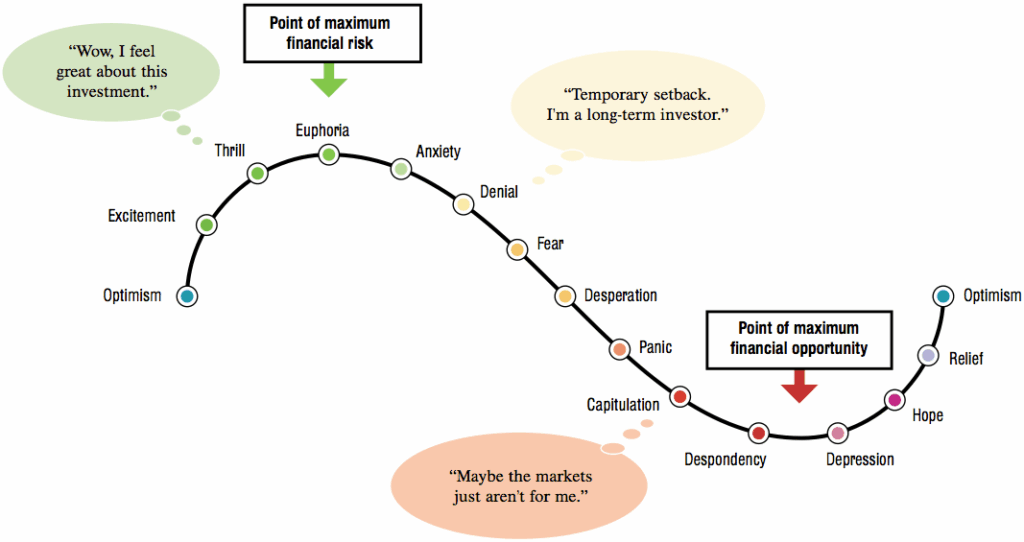
(We think we’re somewhere around Thrill, Euphoria and Anxiety. If you group those three that’s probably about right. Essentially people who didn’t believe markets would be fine have started to take on notable risk, this is usually a bad sign for things to come particularly as we see a lot of nervousness around the most recent pullback. Like we said, we still think there is about 2-3 years left but we’ll update our blog as we go along since it’s a fun topic)
Consumer Spending Freeze: We’ve seen an increase in status items. Rolex’s, Gucci shoes, high-end hand bags etc. While they are great and definitely have use as we’ve mentioned in the past… we’re skeptical of the people we see purchasing the items at this point. We took a look at what it takes to stand out from a crowd of well off people and you’re seeing a bad trend (takes a lot more than before to stand out). This could be a byproduct of changing environments. Yet. We have gone to places we no longer attend and see the same thing. Guys who can’t make more than $250K a year “flexing” with $25,000 watches. Sure. All of our reads on this could be wrong as it’s hard to predict who is really rich in a room with 100% accuracy. But… As usual, we trust our own intuition.
Consumer spending freeze for us means no more “upgrades” for a couple years. This isn’t a big deal as the last decade has been amazing and beyond comprehension. Being forced to hit the pause button on new toys/goodies is probably a good thing (flex the will power muscle a little bit). The entire point of these items isn’t to buy them to cover “insecurity” the point of material goods is that they work! Now that they don’t work as well… Time to hit the pause button. Just like the market, the same cycle will occur. When those nicer items start to become rare and everyone is using an “older version”, we can go back to buying a few nice items here and there.
Change in Spending: At this point, you’re probably imaging a guy shoveling cash into a barrel which is being delivered to a bank to collect 3% every single day. Shovel in, bag filled, deposit, sleep. This isn’t far from the truth. The part that is missing is a shift in spending. If the environment is changing, a lot of the normally nice places begin to fade (Las Vegas is ground zero for seeing the culture change, gets worse during economic booms). Well. This means it’s time to change spending venues. Good ideas include: yoga, meditation, spas, sports (playing not watching) and reading. Since everyone is spending to consume… in typical fashion… we reverse positions. Drinking a bit less and going through a nice detox phase is a good idea any year. Even more so in times like this. We’re ramping up our spending here and luckily its a lot less expensive allowing more time to shovel into the barrel.
How This Sets Up for the Next 2-3 Years
While we’ll update the blog if our views change, we’re pretty convinced that by around 2020 markets will have largely peaked out. Peaked out doesn’t necessarily mean they go down, it simply means the risk/return profile isn’t favorable (see the earlier chart again). We have to remember that as rates go up the market needs to offer much better returns than the risk free rate, otherwise it’s just not worth the time. Yes. We realize we said that twice in this post but its extremely important to remember particularly if someone reading this hasn’t even seen a bear market (a decade worth of people have not, more alarming… that’s around 25% of the work force if we assume a 20-60 year old age range).
Wait for Blood on the Streets – Cash Value: Assuming we’re right and there is a pull back sooner than later, if something half the size of 2008-2009 happens, we’ll be thrilled beyond belief. What you’re looking for is profitable companies with valuations below the cash on the balance sheet. This is a pretty standard approach and happens pretty frequently when there is a panic sale of an asset. Don’t get too greedy and be sure to check the fundamentals of any company. As long as you’re next to certain the Company will generate positive cash flows, you’re in a great position to scoop it up. For those in finance the basic term for this is “negative enterprise value”. We’re keeping it simple with that definition and if you see anything that looks like this, it’s time for us to swoop in. Being a vulture isn’t a bad thing.
A Slow Unwind: No one times the exact bottom. Okay. Someone technically has to by definition. That said, you’re going to get the bottom in some shape or form if you unwind your cash balance into equities, real estate and any other asset on a monthly basis. It’s psychologically difficult to do this as you’ll try to time the bottom only to see the investment go down another 5-10%. Painful. The good news is that consistency allows you to “average out” near the bottom which is good enough. If the bottom is minus 25% and you have an average entry with it down -18%, that’s solid and good enough for the next 10 years. That’s right. It is enough to set you up for the next decade because no one dumps large amounts of money in at the bottom, otherwise they wouldn’t complain about recessions so much. Crisis is another word for opportunity. (Side note: generally -20% is considered an official pull back.)
Search for Pain: This is the brutal part of the post. Your biggest returns are going to be searching for painful situations. Real estate professionals don’t like to talk about it but one of the best ways to get good deals is when a family member dies (not yours a different person) and they are forced to immediately sell the house for cash. There are going to be a lot of situations like this in the next recession. In fact if you search back in 2010 guys like Warren Buffet recommended this in a much nicer way “i’d love to buy a bunch of single family homes”. What that really meant is all of these loans blew up and people were desperate for cash and he’d take advantage of it. That’s really what the underlying message was in a more to the point way. People say that recessions and housing are not related (in some senses they are not) but we’ve found that there are a lot of cash strapped people in recessions which causes you to find some of these extremely undervalued opportunities.
Negotiate: You can tell how good the economy or sub-sector is doing based on your ability to negotiate for a change in price. If you find getting a good deal as a fun game, you’re going to love the environment in a few years. Back in 2008-2009 you could honestly negotiate anything. Even basic items like clothing had sales people who would give you their employee discounts or other backdoor discounts just to try and make the store appear more profitable. It’s quite interesting to watch how psychologies change from “we never do that” to “here are the 100 ways I can get you a lower price”. As of today we’re around the “we never do that stuff” phase and that’s usually a sign for the future.
Primary Items to Focus On
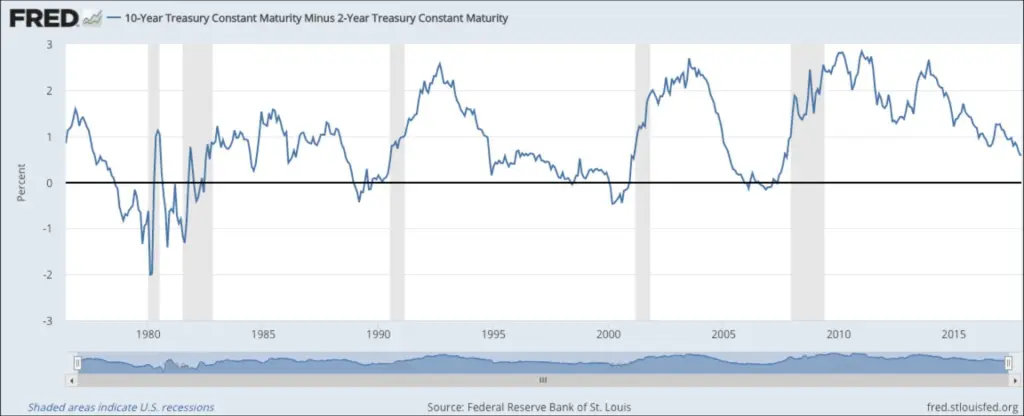
Interest Rates: You’ll notice that the primary item we care about is interest rates. That is because it determines your entire risk tolerance. If we could get 4-5% returns risk-free, there would be no reason to invest in other assets unless we were seeing hyper inflation. If we’re experiencing hyper inflation then you’ll want to own assets since they would also inflate. Putting the doomsday scenario aside, we just look at interest rates and it’s becoming interesting as yield curves are getting close to an inversion. (the 10-yr and 2-yr are what we prefer to look at)
The 30% Rule: This isn’t even a real one just one we use. You can find every single multiple on the planet for stock markets and you’ll see that there is a median/average for each one. If you ever see this multiple go north of 30%, you want to check your investments again. Why? Well we know that the average is say 15x and then there must be a time period where it goes well above this to average (can’t go to zero unless all equities die). So selling just because something is at the average doesn’t make logical sense (more upside left). For a good list of multiples just check out www.multpl.com (no affiliation it’s a common website that people use)
High Leverage: This is going to be a lot harder to figure out on your own and is even harder if you’ve never seen a recession. We’re not knocking on the people who haven’t been through one, it’s not their fault and we can’t confuse stupidity with ignorance (not even close to the same). That said…. an extremely good tell is high leverage. While some people may have higher risk tolerance than you do, take a good look at the type of people taking on leverage. As soon as you see people who are extremely low risk deciding to take on leverage that seems a bit high… that’s your cue. People who make bad financial decisions are always levered up so they don’t say much. When the low risk guys start taking on risk that makes you do a double take… it may be time to look at the portfolio allocation again.
Bonus: Now that rates are no longer at zero (or practically zero). We’d recommend taking a look at this rough chart as a good proxy.
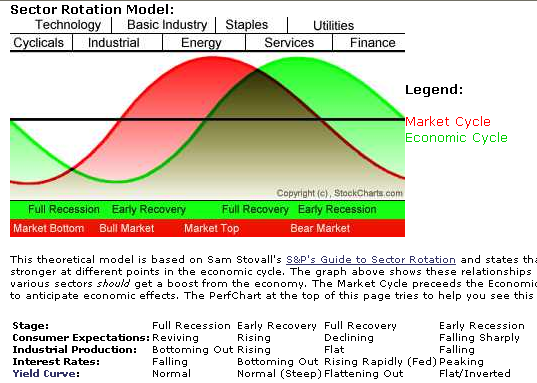
As usual good luck and make your own decisions (we hope you get rich if the market is up, down or flat). If you’re young this post probably doesn’t matter much since your own business + career will determine wealth not compounding of $20-40K. But. If you’re older and haven’t seen a recession in 10 years… At least take a look!















3% returns doesn’t even keep up with inflation here
The official numbers, if u believe them, is inflation of 2%…of course there are reasons to doubt the official numbers, and there are smart people who ARE doubting them…
What’s ur reasoning for 3% returns not keeping up with inflation?
Because nationwide average inflation doesn’t matter in the slightest bit, it’s a completely regional thing. Do you know what inflation actually is? it’s not some number declared by the bank or the government. If you live in some boring flyover dump maybe it’s less than where I live.
With a handful of conservative mutual funds I made 15-20% returns even through 2015 oil crash, 2008 dropped less than 5% and more than caught up the following year, there’s really no risk with real investments unless you’re larping as a day trader. “Guaranteed income” funds are a terrible recommendation
sheesh, just trying to have a conversation… I think the official numbers are measured not declared. At least one reason to doubt the official numbers is the government sometimes switches up the basket of commodities/goods they track the prices of, in order to manipulate the number into what they want. Pippa Malmgren talks about this in one of her books, Signals, where she argues inflation is actually much higher than believed.
What are the conservative mutual funds u’ve been using?
Great post as always. There’s a view of the next downturn (e.g. from Ray Dalio) being more of a currency devaluation. I’m curious how you see that possibility, and whether that type of downturn would change any of your suggestions.
Many thanks,
SS
In a very recent interview, Jeremy Grantham has gone on record saying 25% of a blowoff in the next 4 months (end of April), since this is the point in the political cycle where presidents want to boost the economy using better interest rates for a re-election.
It was on Bloomberg’s Business Masters podcast, but since we know how much u hate podcasts, here’s a transcript: https://ritholtz.com/2018/12/transcript-jeremy-grantham-gmo/
“I don’t think it’s 50 percent any longer but I think it’s maybe 25 percent chance that we will have a handsome rally between now and the end of April.”
You could definitely have a random rally (China US solve all issues for example). But rates will go up over next 1.5 years so continuously de-risking after being up well over 100%+ on stocks is pretty attractive
Consumer staples are another huge opportunity, especially since there are individual stocks in the sector that have already declined 20% or more.
These stocks usually perform pretty well if you’re long-term oriented and investing in an early-recession environment (like we are now).
They’re valued for their steady dividends (and dividend growth) and make a good source of income. Consumer staples, contrary to popular opinion, generally hold up when there are rising rates.
I know that this is not a q and a. But I wanted to ask you. Now that I gave up tv completely and focused on reading like you guys told me, and transferred all my ebooks into pdfs, what can we do about the damaging effects that the blue light has on our eyes…You always preach health over wealth so thats why I ask…Can’t read physical books at work only at home. And I buy a ton of ebooks on my kindle which dont take space and I can take with me everywhere I go and listen to my audiobooks while I work out. THANK YOU.
buy bluelight glasses? lol
I’m a software engineer and I read kindle all day and I have a Shopify store…
No issues at all.
Keep sleep and diet on point.
Don’t worry about useless things.
Can’t believe you two responded. Nicest guys on earth.
Will be interesting to see how many ‘entrepreneur goo-roos’ who rely on selling common everyday items to millennials through funnels manage to keep their businesses intact during the upcoming bear market.
Friends, another good post.
In simple terms, liquidity is going away – everywhere. Someone has to hold any asset at all times —> price adapts.
Whether it is for financial assets or luxury items (2nd hand, non-collectible so not scarce). Funny how super expensive assets are always sold at the top of the cycle? Ferrari 250 GTO, super rare Pateks, art works, prime real estate. Those are scarce assets.
Non-scarce assets such as basic Rolex, Gucci loafers, 911 etc. will tank. For those interested, have a look at the 2nd car market in UK on ”trophy” cars that are a couple of years old (Lambos, Audi R8, 911 Turbos etc). No liquidity, a lot of offer. Just look at how long ads have been up. Note that this is an early tell.
I have no idea on timing, I just note tells from various markets to give me an idea on how to allocate in the cycle.
I was around in 2000-2002, on a merger arb desk in 2008, and own a small asset manager. I am not positioned long risk assets, and am putting a premium on liquidity.
Interesting would love to see the links on the assets that cannot be sold easily anymore, if not no worries
Ha, another relevant indicator is the “Skyscraper indicator”, which postulates that the building of the tallest building in the world is a recession indicator. This speaks to what u said, “Funny how super expensive assets are always sold at the top of the cycle”
The most recent tallest buildings planned are the Basra (Iraq, which was a warzone until recently), and the Jeddah tower in Saudi Arabia.
So cash reserves and mixture of $BND and $VTEB?
As above, i follow the UK (supercar) and watch markets.
For a recent example i spotted, this guy (multiple supercar owner) – watch from 12m onwards:
https://youtu.be/W5ESKpi2eyc?t=720
“Right now if you want to sell a car, particularly here in the UK – it is suicidal. They do not move. The prices have collapsed. The market has completely crashed. On every brand, on every car. You can pick up a 720s for next to nothing. You can get a 488 for peanuts. You can get a huracan performante at a massive discount. All of these cars, the values are going nowhere – because people don’t want to put their money into cars. Financing is challenging at the moment because money isn’t so readily available”
Interesting stuff. There has been bubbles in SS rolex / porsche market, all powered by low rate financing. Will be interesting to see how this plays out in next few years.
The newman daytona also sold in 2017 breaking records. Construction is booming, several “flagship” new buildings in my city (new tallest tower, etc) – these are all good tells of top of market…
Can you comment on the US super-car market? (not familiar with it). Not sure UK is *that* helpful of indicator for the US stock market, due to UK having Brexit/EU geopolitical problem that US doesn’t have.
As stated above: someone has to hold any asset at all times. .
Of all the market mechanisms, liquidity is the most important. It would be too easy to say ”the recession will only arrive in 2020” like most economists. When the mood changes, when the perception of value changes and when liquidity disappears…prices change. Sometimes faster than you think (oil in November). The mechanical steps: no liquditiy/no bids.. –> price adapts to liquidity –> explanations on why an asset went up/down.
Specific areas of value:
– Some pockets of credit is trading at potentially attractive returns if you believe that the company can service and refinance through a downturn. Eur HY, some financial debt. No guesswork on valuation, just need to take a view on probability of being made whole.
– Some quality shares that have already weathered a recession are cheap (Greece…). You have to accept vol though.
– A strategy that usually does well during economic turmoil are CTA/managed futures. They are currenlty in drawdown, usually a good time to invest. Dunn, AHL, Aspect…they all do the same with different levels of volatility.
I commented on this article as the author seems to note a change in mood, I certainly note one, and others out there as well.
Remember that in the last crisis it was the financial assets that tanked first and THEN the economy. No idea on sequence of events – obviously I can only comment on what I see today/past.
Only advice I give is think about position sizing, liquidity and make some scenarios.
I don’t follow the US market at all so can’t comment. Certainly could be because of brexit worry – and isolated to the UK.
Great comment!
As a younger investor, why does it matter what the market does if you’re going to Dollar Cost Average into it from your income sources? I get that bad times means career compensation goes down and fewer immediate opportunities but shouldn’t be able to just un-emotionally buy the dip with almost the same amount of cash per month? Shouldn’t the 30% correction not matter as much?
As long as it doesn’t hinder your opportunity cost by doing so, last thing you want to do is not have cash on hand to be able to take advantage foreclosure, business opportunities, expansion, etc… worst is not adjusting and having to dip into that portfolio for cash prematurely when/if money gets tight.
lol b/c it doesn’t seem like this blog’s strategy is 100% stock market passive investing…which would be, as you point out, DCA regardless of economy/market conditions. These guys tend to hold a general macro view, then based on that, DCA or not. They have similar strategy for Bitcoin for example. They have a pessimistic Bitcoin outlook until 2020 due to all the crypto hedge funds exiting, so they are not DCA’ing into bitcoin until the hedge funds exit.
You are correct, and the HFs exit is almost complete.
Funny enough your paragraph was better than we can even describe! You basically DCA as long as you know valuations are not extremely high (we use 30%) and when they get there you focus on cash and repeat. Do this with all markets same idea. Not trying to time the top or bottom, just broad strokes.
Got it. So with this strategy, the last few buy points will likely be at bad spots relative to the peak, but the majority should be ok since they were bought into earlier.
A tangible example this morning of what this post is discussing.
Look at ASOS results today, stock down around 40% in morning trading. That’s back to 2013 levels. Asos in an online fashion retailer, Nov sales were ”significantly behind”. You will see the contagion to the sector as Zalando down 15%, as well as other retailers. This is all psychology.
This is the mood that we are discussing, and an example of the liquidity mechanism.
A simple strategy for most readers/non-professionals would be to follow a system such as:
http://www.optimalmomentum.com/gem_trackrecord.html
Basically just risk management where you switch from equities to bonds when the long term trend switches. Mitigates drawdowns, protects capital. Works well with monthly averaging.
You can focus on your cash generating business and/or not getting fired in your career if we have a slowdown.
“From today going forward, we’ll be investing 95% of all excess cash flow into boring old risk free investments that are returning around 3% today.”
Love this blog but the question is are there any risk-free 3% investments out there? Looking at Fx fluctuation and where we are in the market, I don’t see a fund or savings paying that.
Even my wife’s ally bank savings account is pushing 3%
typo:
“As soon as you see people who are extremely low risk deciding to take on leverage that seems a bit high… that’s your queue.”
cue …
Fixed
What is your stance on hedging in physical precious metals that should outperform all during a market crash and can be sold immediately for a 5% fee ?
Also as you use PE ratio as an indicator wouldn’t emerging markets be a good investment when the economy picks back up, if you are young and have the time to withstand their wild swings?
Thanks in advance
Coming back to this post 5 months later and broad market is up 18%.
You called the bottom… except you called it top.
Yep fine with it, we won’t be buying for 2-3 years. Most people are stupid and think it’s a timing thing (it isn’t, trump likely wins again then nowhere to go but down in 21 and beyond)
Stopping the buy orders does not mean sell. But only rich people know this, poor people think we’re trying to “time the market”