

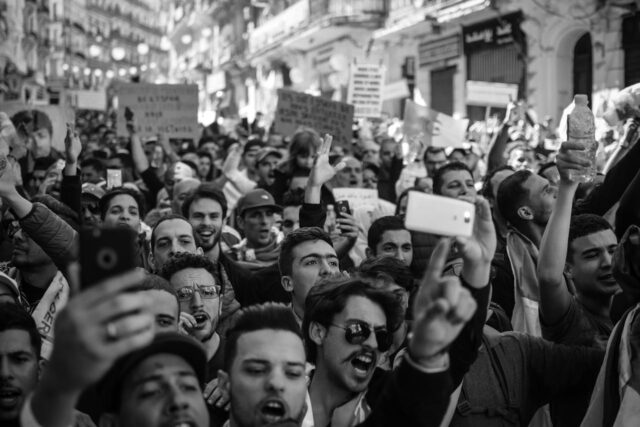
It’s getting crazy out there. After a couple of months of quarantine we’re now seeing riots break out across the United States. The protests seem to be a mix of both the Floyd incident and upheaval around economic inequality highlighted by chants of “Eat the Rich”. As the economy opens back up we’ll see what the real unemployment rate looks like (our guess is that double digits will remain, somewhere around 10%). Also. We’ll see how many companies adopt work from home initiatives and reduce back office jobs.
Technology Will Move: This is one of the main beliefs we have. Having a programmer work in San Jose, London or a cabin in Colorado doesn’t make a difference in the function of their job. In fact, the main reason people show up to offices is for “face time”, ie. management is usually insecure/micro-managers. After this experiment the companies have realized employees just wanted more autonomy and are willing to work *harder* if they can work from home. So their initial assumptions were flawed. We stopped tracking it but Facebook, Coinbase, Twitter, etc have all become accepting of the work from home environment.
Looking across other sectors of the economy… Anything that can be done with a phone call is likely going to move remote as well. In short? Knowledge workers. Anyone who earns with their information/insights can simply work from anywhere. Think about the blogging industry as it’s the easiest to understand. If someone write a post in China or Australia or New York… Does it make a difference? No not really. Apply this to many white collar professionals and you’ll find that many of them can quickly go remote as well. If you’re simply being sent documents to review and load them up to a secure work area… Lawyers could easily do this from a home office as well. You’re just reading, correcting and loading items to the cloud.
So while Tech will move first, the other white collar professions will move second. Sure. There are several positions where face to face interactions are critical. And. Those positions will still be reduced from a pure numbers perspective. Once you have an established relationship with a client a zoom meeting will suffice for a large number of interactions. Instead of assuming that businesses will operate the same (they won’t) look at what areas will be impacted first and follow the bread crumbs from there.
Physical Migration: After we’re past the first phase or two of the re-opening, it would be wise to think about the “flow of people”. Similar to the concept of fund flows. If we can agree that a lot of technology jobs will allow remote work, where will these employees move to? It seems likely that someone living in San Jose/San Francisco would move to a place like Los Angeles if they wanted to stay in California and live with better weather. It seems likely that someone in New York/Boston would want to move to Miami or perhaps the Carolinas for a similar reason. People who cannot afford the major cities would then move to “similar” cities with a “similar culture” – just think of political affiliation for this one.
This is probably the most important question for our readers. Forget about what major city you want to live in now, ask “which major city will have the better environment in 2023”. This is not the same question anymore. With this much economic disruption, the amount of migration is going to be quite high. We wouldn’t want to be living in a concrete jungle with high taxes and poor weather in 2023. As mentioned on Twitter, the weather is probably a good starting point for choosing your new city to live in (if you plan on moving).
Wealth Tax? This is another concerning issue. With high unemployment and billionaires becoming richer by the day… A wealth tax is likely going to become more and more popular. In fact we think this has a decent chance of going through. When you think about the ramifications here, it is a lot easier to follow the bread crumbs. What items are easiest to tax and track? Quite simple: 1) real estate, 2) bank accounts and 3) stock accounts.
This has a lot of implications for all of our readers. It means the value of physical assets goes up 1) physical cash, 2) physical gold/silver, 3) crypto currencies and 4) rare collectables. Why is this a big deal? It’s a big deal because the current environment seems to be pushing for inflation on necessary goods and deflation on aspirational goods. Right now, rich people are not able to spend on much. They are being forced to live pretty standard lives which means the price of basic items like food and drinks are going up while the price of “attention goods” such as a BMW/Porsche are going down.
As usual, we’ll jump to the conclusion. Instead of worrying about a wealth tax, it’s a good time to go ahead and set up a small home vault/security system. What does this mean? A way to hide physical assets at your home in a safe manner. At the low-end a high quality safe with a couple of cubic feet of space is going to cost anywhere from $200-350. This is nothing compared to the amount of money you can store in there (using a combination of gold and physical cash you’re easily storing over a million dollars in value). If you throw a crypto currency wallet like a ledger or nano inside, the number is then infinite by definition.
If you’re in the ultra-high net worth camp, call it $20M+, then looking into vaults/secret doorways is another viable option.
We realize the last two paragraphs make this post seem ultra paranoid… that said with interest rates at 0% and no return profile on cash anymore, at home banking solutions are now viable. For example, if you think the price of gold only goes up 1% per year for the next 10 years, then what’s the downside of holding $250,000 worth in a completely hidden area? That’s a lot better than a safe deposit at a bank since it can easily be seized. In short, we’re fine with appearing crazy for this move as we see limited downside in creating a worst case scenario exit plan. If you’ve followed the advice on this blog for the last 8 years you’re making more money now vs. pre-pandemic and on top of that your investments are up anyway. Taking 5% of current net worth and creating a “worst case scenario set up” is pretty reasonable. The real key is the “set up”. Make sure you can quickly move more and more assets into your new security system if taxing the rich becomes popular. Again. Laugh if you like, billionaires build bunkers out in strange islands/places preparing for such scenarios so our solution is tame and cheap.
Currencies Are a Mess: Look no further than Brazil. The country decided to ignore the pandemic and now they have a catastrophic health issue and the Brazilian Real has devalued to 5.33 per dollar from 3.92 per dollar in a single year. This is a substantial issue for them as their ability to import items just went down significantly. Hong Kong is also going through a lot of protests. Individuals are rapidly exchanging as much as they can from HK dollars to US dollars. If there is a decoupling of the Hong Kong dollar and the US dollar, the citizens do not want to suddenly lose purchasing power.
Who knows how this plays out. If we want to place a bet, it would result in more countries defaulting on their debt. Argentina defaulted already and there is a high chance of more to come. This means the carry trade is still alive and well (take debt out in foreign currency and convert immediately to more stable currency and pocket the spread when it collapses).
The chances of some sort of V-shape recovery are slim/next to none as restaurants, airlines, cruises, hotels etc. are all going to be under headcount restrictions. If people can’t move around and spend, there is no way for GDP to grow. While the opening will allow for some return to normalcy (an improvement) believing we’ll be back to 4Q19 levels any time soon is simply delusional.
Onto Some Action Steps: The good news from all of this is that e-commerce is going to see structural increases in demand. This has happened for the last 10 years and the pandemic is just going to increase the market opportunity. If you are still on the fence about this we really can’t help you anymore. You have riots on the streets a global pandemic and high unemployment. Online sales is going to flourish like never before and there is no reason for you to personally go outside to purchase goods either. What is the point in going to a retailer when you can order the exact same thing, avoid travel costs and decrease exposure to COVID-19 at the same time? It makes no sense to go out, simply order in and wait until the pandemic is officially over. The looting and rioting is just going to spread the virus faster.
In simple terms: Step 1) continue to order everything you can online, avoid going out to any area with serious looting/rioting. Step 2) take up some sports that are isolationist in nature – golf, rock climbing, etc.. Step 3) go ahead and cancel the gym membership and order all of your at home items now. It’s clear that the gym will not be a great location for the foreseeable future. Step 4) build your at home banking system, no other way to describe it. Step 5) try to order everything in bulk, this refers to non-perishables, food that can be frozen etc. Step 6) begin testing various ad campaigns, when the economy opens up next month people will realize how inefficient retail shopping is; time to take more market share. Step 7) carefully package and store your luxury items, you don’t want to stand out as rich during a potential riot in a major city. Step 8) set up alerts for housing in any major city with a nice beach or good weather. Step 9) continue to stack up physical assets if you can and Step 10) it is a very good time to lie down in front of friends and family, use the pandemic and riots as an excuse to tell people you’re *losing* money. Don’t be stupid and flex in public.
Final Note: Not much has changed in terms of preparations: get online business running and begin down playing your success by a wider margin – by an extra 20% or so. That said, we’re much more concerned given the amount of riots we’ve see. The chances of full employment by year end is incredibly small. Too many companies have learned that a lot of fat can be trimmed due to software and the use of new technology. So. We’d recommend doubling down on your internet ventures and taking the more cautious tone to heart for the remainder of 2020. When we’re past the COVID-19 situation (officially) it’ll be time to get aggressive in buying/investing and riding out the next bull cycle.














I work at one of the big tech companies and don’t think that the best people will ever go remote. Ultimately, any p75+ engineer at these companies is likely not coding more than 25% of their time, they’re likely doing a lot more meetings, writing docs, communicating up and running programs more than anything else. This is already my schedule maybe with even lesser coding and I’m just under a year out of college
You can already see Eng productivity has dropped a ton at my company and yet for some weird reason we’ve decided to fully support remote work. Likely a lot of these people will fail, at least for the next 2 years.
Interesting take there
I agree with both statements. I work at a large “knowledge work” firm and productivity has not kept up since shifting to WFH.
With that said, I still think the end result will be work from home becoming the norm. Too much fixed cost savings and too easy of a PR win from a corporate perspective.
The sad truth though is that after the initial transition, most firms will downsize anyways because of that lack of productivity across the board. Those that can sustain work levels while working from home will be the big winners as they will keep their jobs, most likely earn promotions, and even with an increase in workload from those colleagues lost, still have maybe 40-50 hours a week of actual work. But with no commute, no internal office distractions/politics, and ability to work flexible hours of their choosing, it should be a desirable scenario.
Flex-work is another possibility.
Rumor is my firm will encourage coming into the office 1-2 days per week to minimize occupancy levels, the rest wfh. Also helps blunt how CDC guidelines will make the office “experience” considerably less enjoyable.
Flex-work adoption would boost exurbs and towns outside of major urban areas. They become viable if you “only” have to make the drive a few times per week.
I agree.
I am a software engineer who works for a large household brandname we hear about often. I have worked remotely for the last 10 years starting when my son was born in order to be a “stay at home dad” and available. Best decision. I have consistently advanced my position remotely from company to company over that stretch with diffrent mentors to the point that I was recently promoted to a “distinguished engineer” in said organization during the covid 19. A strange contrast with my Brother who is an extremely hardworking and talented Pastry Chef that gets furloughed at the same time with 2 mouths to feed.
I personally treat every advancement as a windfall and will be moving a portion of that new bucket to the North West and will not subvert. Fact.
Interesting you got promoted so much working remote. What do you think is the biggest reason? I could see if you’re that guy who steps up, takes on anything and gets it done right… that could be the ticket.
Soft engr is an area where if you have the goods and deliver, and are socially adept enough to make sure people know, you can build some leverage.
seems to be moving to a hybrid approach.
no reason for FB and G to have been offering so many in-office perks if they didn’t believe there is benefit by commuting to office
Just to touch on the safe part. Use common sense in where it’s being stored.
i.e any low IQ looter would think to go to a closet to check for a safe valuables.
If you own your home outright and have tile floors, consider adding a safe under one of the tiles. You can just replace the tile and have it seem flush/inconspicuous pretty easily.
The downside is there is no “quick exit” (need to break the tile + open safe vs just opening the safe and leaving), but higher ROI when it comes to safety/security.
Another place you can consider is inside a wall where the cut lines are places behind a hanging shelf’s seems.
good ideas, there has to be a most effective way such as a vault behind a mirror or something similar.
Terrible idea, Here’s why: Robbers are usually pressed for time, so they will start to smash windows, pots etc. for quick gain. Looters in comparison are even more destructive and they have all the time to get what they want.
If the riots comes to high net worth areas they’ll likely smash anything that could lead to something valuable, since they have a lot of time to pick for goods. Look at how quickly looters emptied out car dealerships of high value cars
While I’d still suggest a safe for physical goods, there’s no reason why you can’t keep crypto on person at all times.
A $300 safe may not cut it against a determined person unless it’s encased in concrete or hardened steel, especially if time is on their side. The doors are bomb-proof and the other five sides are suspect steel and drywall. Aside from the fire protection element, entry-level safes are designed to keep the housekeeper from snooping.
Another consideration is where you live and how bad law enforcement response times may get. Keep in mind that $15K safes used at government sites are designed to keep people out for a limited amount of time. Consider keeping just enough in a safe stored in an obvious location to satisfy the intruding douche and the rest stashed throughout the residence. Ideally, assets are distributed at “off-site” locations with a trusted friend or family member who doesn’t live nearby.
Each person is in charge of their security and knows their environment best. Get creative juices flowing by reading Jack Carr’s books (his stuff is based on personal experience interlaced with an author’s creativity).
Depending on living situation, could also use an in ground cache. I have used a Mono Vault 212 for years now. Can store an incredible amount in it. They are waterproof and usually just change out the desiccant pack whenever I open it few times a year. I went this route over an in house safe due to added benefit of fire/natural disaster protection. Nothing worse than a natural disaster or fire and having a couple hundred thousand in valuables in a safe you can’t get to in a collapsed structure. In addition to cash/metals, also keep copies of drivers license and credit cards so if something happens, I can always still get a hotel room and start sorting my life out. Feel much less vulnerable to fate having physical assets stored this way. Also, would never tell anyone else about it, ever and much easier/private to move personally and avoid moving company personnel knowing you have a safe/valuables if moving to new home.
One additional idea. If you are in the ultra high net worth segment, buying/owning a small farm somewhere in a rural area to me is a great safety net.
A small home on a working farm with a few ways of protection (firearms etc) is a pretty solid disaster zone fallback. Shelter & Food are great building blocks =)
Of course you are still in the U.S. and so if the entire country goes up into flames (I think this is very unlikely), you would need to revert back to foreign real estate or easily accessible funds in a foreign country (Most likely digital currency).
“Of course you are still in the U.S. and so if the entire country goes up into flames (I think this is very unlikely)”
Agreed. Betting against the US is long term a bad bet. Would say some cities esp San Francisco, and maybe Portland and Seattle, are likely to get worse before they get better and maybe a lot worse. Texas though, we got way too many guns and boog boys for some riots to be more than a short term disruption.
I disagree with the idea that you should never bet against the USA.
The American people are completely different from what they were only 100 years ago. Spiritually, culturally, physically. Nobody even knows what an American is. The barrier of entry is extremely low.
These riots are only the beginning. We do not know how bad things can get.
One of the best investments you can make. However, building and maintaining relationships with your neighbors is key. I have a farm (25 acres) several states away; I spend about a month there each year and lease some acreage to a neighbor. If/when I move there full-time, the neighbors will already know and trust me.
Worst thing you can do is show up with an attitude like cardoneisprettyalphabro’s (see below).
I think a wealth tax will run into constitutional issues and won’t pass in the US. A lot written about this. But current rioters movement will gain a lot more sympathy from general public once consumer prices inflate and 20 and 30 somethings realize their jobs are permanently gone. Gonna be a lot of folks out a job with nothing to do but protest in rich areas and try to ruin the lives of successful people. It’ll be woke. Think Joker
Going to be an increase in interest (and profits, for people supply the demand) in survivalist type stuff once they realize that 911 isn’t going to save them when SHTF. Not even mass riots but generalized mistrust in government (chief of Minnesota’s law enforcement Keith Ellison is a wife beater…wonder why it’s so out of control over there) and generalized increase in crime. Anecdotal evidence only but past 48 hours had multiple people reach out about gun advice and 1 even asked about body armor. All civilians. Also anecdotal, 9mm ammo totally sold out at my local Academy Sports and lots of people in line as buyers of firearms.
There’s a demand.
I wanted to add to your thoughts on cities. The aftermath of these riots will accelerate the exodus of densely populated cities.
People for the last 50 years have increasingly preferred to live in places that are more suburban and sprawled out so they do not have to deal with crime, corruption, and high cost of living.
As the country continues to fracture we will see large urban areas that are essentially 3rd world followed by small cities/rural/suburban areas of non 3rd world occident origin that distance themselves from the increasingly self destructive urban areas.
I live in Manhattan and this weekend was crazy. Right across from me a rioter threw something at a glass window and broke into the bank. Peaceful protests during the day and rioting at night as of this weekend. Viral videos on social media of outright police brutality are not helping either, it is emboldening the rioters and there is no doubt that law enforcement desperately needs reforms.
All politics aside, I started my new job a couple months ago (got offered in early March) and it has been all remote (SaaS sales, 2nd SDR role ever). CMO leaves my third week into the job, the next week Director of Sales resigns, and end of July my lease ends on a sweet apartment deal I got in Manhattan. I have to let them know by end of week if I am renewing.
Kind of in a tough space mentally too because starting up an online business IS TOUGH as hell when early on. Then in terms of Manhattan, I have fallen in love with the area and it social opportunities but nothing Nightlife related opens up by end of this year.
Funny thing is I walked to Washington Sq park this weekend and found that it was peaceful on a sunny Saturday. People laying around and most not even wearing masks!
I am being mindfucked right now. Leave a potentially good deal in Manhattan and regret it or stay in Manhattan and have things go even more downhill. So many of my friends have moved to Florida, Texas, or other Northeast cities with beaches due to COVID-19 but I wonder if it is temporary. The temptation to be in Charleston really does bite at me, I mean the ratio is supposed 9 girls to 1 guy and Carolina girls are so friendly.
Right when I am getting settled in this city too, god. You do make a strong point about migration but the issue with southern states is the increased heavy pressure to be married by 30 and the Bible Thumping goody two shoe culture that drains you. NYC is an escape from that to where you can enjoy your 30s socially and dating wise as a single guy.
I am 27 with 5k in checkings and 10k in the 401k and its not a good feeling.
“You do make a strong point about migration but the issue with southern states is the increased heavy pressure to be married by 30 and the Bible Thumping goody two shoe culture that drains you”
Believe what you want, that’s your own business, but check your attitude if you move. Applies anywhere. Don’t be that guy who first order of business is pissing off all the locals.
I also am the same age in Manhattan with a pretty good deal on an apartment, lease is up end of August. Will essentially have been paying for it for 6 months by then without living in it (living at parents now)… sucks.
I have a girl I’m dating there (that I haven’t seen in 3 months lol), but other than that I just don’t see the purpose of being in the city without the ability to: meet new people, go to music shows, go to language meetups, work at the office and build deeper relationships with coworkers etc. The fall weather will be crappy and then winter would be unbearable.
It basically defeats the purpose of NYC, which is to be able to date the hottest girls from all over the world, build networks with cool guys, and enjoy the arts (live music is my fav). The city doesn’t have amazing parks.
I’m thinking I’ll just move back home, and save essentially 90% of my salary. Downsides are no dating at all, basically going celibate. Or I was thinking of going to the Canary Islands and spotting up for 3 months, working remote.
Disagree heavily on Silicon Valley seeing huge migrations out.
You’re forgetting about the racial angle.
Programmers are largely Indian and Asian: most are nerds, many are FOB’s. They have little else besides their careers, they are workhorses for their wives and extended families.
The Digital Nomad / remote work dream is a lifestyle that does not appeal to them. They are boring and completely un-adventurous. Given the choice to live anywhere, they’ll still live in Fremont: it’s all they know, and all they care to know.
As soon as Indian and Asian programmers know that 1) a company’s remote workers don’t get promoted and 2) paycuts are necessary when doing remote work from LCOL — they’ll stay put.
Additionally. A lot of them are here on H1B visas. If you get laid off on an H1B visa you have X amount of time (two months or so IIRC) to find another position, or else you and your family have to leave the country.
If you’re here on an H1B you must stay employed at all times — that means living somewhere with 1000+ companies within driving distance that might hire you if you get laid off.
That’s to say nothing of the billions upon billions of VC in Silicon Valley that is always up the ass of any company it’s invested in.
Full disclosure: I live elsewhere in California, but I am targeting rental property in Silicon Valley. Agree that San Francisco will be devastated, not so sure about other areas.
absolutely agree, most programmers (no matter what the race) at these top tech companies would always choose to live close to the HQ because the free food/office perks/dress code/work culture is amazing
also, one possible reason for tech hubs being located in boring, isolated & cold cities (with ugly women and crappy nightlife) is because there’s nothing better to do than stay inside and work on technology. It’s hard sitting inside staring at a screen with 80 degree weather outside and a beach filled with young and sexy models?
Any thoughts on the New York City suburbs (Westchester, Greenwich etc.) if people now have the ability to work from home on a part-time basis, but still need proximity to New York City as they may need to still go in etc.
I wouldnt store at home. Experienced this in our home country of South Africa, when violent criminals come to your house they usually torture for the best stuff. If they aren’t pleased with their haul they start with the boiling water for the ear or the hot iron for the feet. What does work is having easily accessible decoy cash, say $5k in an obvious safe, but keep the other stuff hidden. Oh and also have car keys handy to hand over.
On the isolated sports, I’m finding theres lots to do, but humans are social animals. If we have to stay away too long I’ll rather end my life or move extended family to a compound to live in, lol
Brazilian here. Its actually even worse. our currency went from 4,02 to 1 dollar by the end of 2019 to 5,82 peak just 2 weeks ago. some companies without adequate hedge, and even big name funds have been destroyed. keep on HODLing
still safe to travel to meet women for vacation ?
I work for a Big Tech trillion company, and from the inside these are my guesses:
1) asking for workers to go back to office is too big of a liability. That’s the main driver: what if somebody sues you because you were not able to ensure the “safest working conditions”? Hard to prove either way, and big company will play it safe.
2) Higher value for beautiful, suburban locations that can have a long commute to company headquarters (90-120 minutes) but are much more affordable, as nobody will be expected to go more than 1-2 times a week in office. Think Santa Cruz outskirts (e.g. Aptos, etc) for Silicon Valley, Ventura county for LA, Snoqualmie / Issaquah for Seattle, etc. Traffic will be better, too.
3) Harder to achieve promotions, due to less “face time” with stakeholders that are not directly involved with your work, and with you can’t have anymore any “watercooler time”. Most people will accept a slower path to growth in exchange of the benefits of WFH and its “freedom”.
4) In addition to restaurants, cruise, travel, entertainment and so on, fashion industry will be hit severely. Less need for “elegant” (or at least business casual) clothing. Been WFH for a quarter now, and I haven’t both anything else than running shoes and socks.
5) Productivity loss which varies A LOT by person: some employees are more productive in the WFH environment, some are way less productive. It’s a function of how well they self organize, and whether they have kids (which ATM they have to homeschool, big deal).
6) Agree that the best people will never-ever really go fully remote and move to a cabin in Montana, but they can work remotely for – let’s say – five weeks, from a rental house in the Caribbean, and take three weeks of “remote work” and two of vacation, thus spreading the cost of travel. I will see this happening more and more.
***Completely agree with this comment.
-slightly harder to play the political game for promotions.
-less of a need to “be seen” so spending on clothes or anything that boosts status has dropped ALOT
-good thing is, there’s is more time to work on a side business since no one is looking over your shoulder.
-savings & health has gone up (less commuting, better sleep, lower stress, better workouts)
I work in software sales (enterprise) and the overwhelming consensus from anyone >30 yrs old is remote work was horrible.
Crappy zoom audio + no break from your family / young children
I work medical. It’s mixed. Physicals in person. MH online. I’m thinking going into psych is a major money maker though it’s still time for money.
Also if you already have money, Europe’s looks nice every year. If your single, marry in. Laws are different there.
Good time to be in the glass business.
“Don’t be stupid and flex in public.”
I was dying to say this until I read it. I’ve been saying it for months, the people that flex by driving fancy cars, fancy gadgets, and designer clothing are going to get robbed. If I were walking around you would never correctly guess my income, what assets I own, bank account amount, what I do. I hide my information and to some extent am careful who I let into my inner circle. Even here on this site I’m reluctant to share my name, what I do, etc. Where I live we had reports of morons throwing stuff off balconies in their fancy apartments only to get gunfire returned. I need to reread this post again just to get everything to sink in.
I’m currently typing this from LA and need to take a little break from working 12-16 hours per day. Still working to some extent because a shark never stops swimming! Have burned out before and that experience isn’t fun. Over here we have curfews in certain parts of LA. Have heard about some people burning Mercedes. Have also seen some brick and mortar businesses shut down permanently. There’s National Guardsmen here.
Can also add don’t mention anything about punishing looters or rioters. Some people don’t / can’t distinguish the two. I hope this makes you laugh please tell me how to reason with this:
“If there wasn’t police murdering people then there won’t be riots”
Learn from my mistake fam, I need to be careful with communicating with morons. I’m at a point in my life where I need to have a lawyer or two at my fingertips (Post request lol). My life is getting better by the day, in spite of all this madness. Can’t say the same about people that want to throw their lives away by looting (bad karma).
So this was my last post months ago! Just been working on schoolwork along with my various other side projects.
Always be learning and earning.
You either tryin’ or you dyin.
I love this post, it might be my most favorite.
Re-brand.
Wall Street Playboy Preppers.!